
The Beginner's Guide to Cannabis Edibles: Dosing, Onset & Safety
Edibles hit differently than smoking, and the wait is exactly where beginners get into trouble. Here is the science behind the slow onset, the start-low-go-slow rule, and how to stay calm if you take too much.
Edibles are one of the most approachable ways to use cannabis, and also one of the easiest to get wrong. A gummy looks like candy, tastes like candy, and asks nothing of you except patience, which turns out to be the hard part. Nearly every uncomfortable edibles story follows the same script: someone takes a dose, feels nothing after 45 minutes, takes more, and then both doses arrive at once. This guide is about avoiding that script. We will focus less on memorizing a dosing chart and more on understanding why edibles behave the way they do, because once the timing makes sense, the safe choices become obvious.
Why Edibles Take So Long to Kick In
When you smoke or vaporize cannabis, THC moves from your lungs into your bloodstream and reaches your brain within minutes. Eating cannabis takes a completely different route. The edible has to be digested, absorbed through the gut, and then passed through your liver before it reaches general circulation. That detour through the digestive system is the entire reason onset is slow, and it is also why the effects feel different and last much longer.
There is a second twist that matters even more. As THC passes through the liver for the first time, an effect known as first-pass metabolism, a large portion of it is converted into a compound called 11-hydroxy-THC. Research suggests this metabolite crosses into the brain readily and is more potent than the THC you inhale. So an edible is not just a slower version of smoking. You are largely experiencing a different, stronger molecule, delivered on a delayed timeline. That combination is exactly what catches beginners off guard.
The liver turns much of the THC you swallow into 11-hydroxy-THC, a metabolite early studies suggest is more potent than ordinary THC. Inhaled cannabis produces far less of it, which is why the same milligram count feels stronger as an edible.
Realistic Timing: The 30 to 120 Minute Window
For most people, edibles begin to take effect somewhere between 30 minutes and two hours after eating, with the peak often landing around two to four hours in. That is a wide window, and where you fall inside it depends on your metabolism, your body weight, the specific product, and crucially whether you have eaten recently. The single most important number to remember is this: do not judge whether a dose is working until at least two full hours have passed.
- Empty versus full stomach: taking an edible after a fatty meal can slow onset but may also smooth and lengthen the experience.
- Product format: hard candies and lozenges held in the mouth can act faster than gummies you chew and swallow, because some absorbs through the tissue in your mouth.
- Your own metabolism: people process cannabinoids at genuinely different rates, so a friend's timing is not a reliable guide to yours.
- Tolerance: regular users feel less from the same dose, but for a true beginner that works in reverse, so plan as a beginner.
Feeling nothing at 45 minutes is normal, not a sign the dose was too small. The most common cause of a bad edibles experience is taking a second dose during this quiet stretch. When both doses finally peak together, the result can be far more intense than intended. Set a two-hour timer and do not touch a second serving until it goes off.
Start Low, Go Slow: Your First Dose
Cannabis edibles are usually labeled in milligrams of THC. For a beginner, a low starting dose is generally considered to be in the range of 2.5 to 5 milligrams. Many commercial gummies come scored or pre-portioned so you can take half a piece, and that is often exactly the right move for a first try. A standard retail gummy is frequently 10 milligrams, which is a meaningful dose, not a starting point.
Start low and go slow is not cautious-sounding filler. It is the practical consequence of everything above: because onset is delayed and the active metabolite is potent, you cannot course-correct mid-experience the way you can while smoking. The only point at which you control the outcome is before you eat. Take a small amount, wait the full two hours, and only then decide whether to take a little more next time.
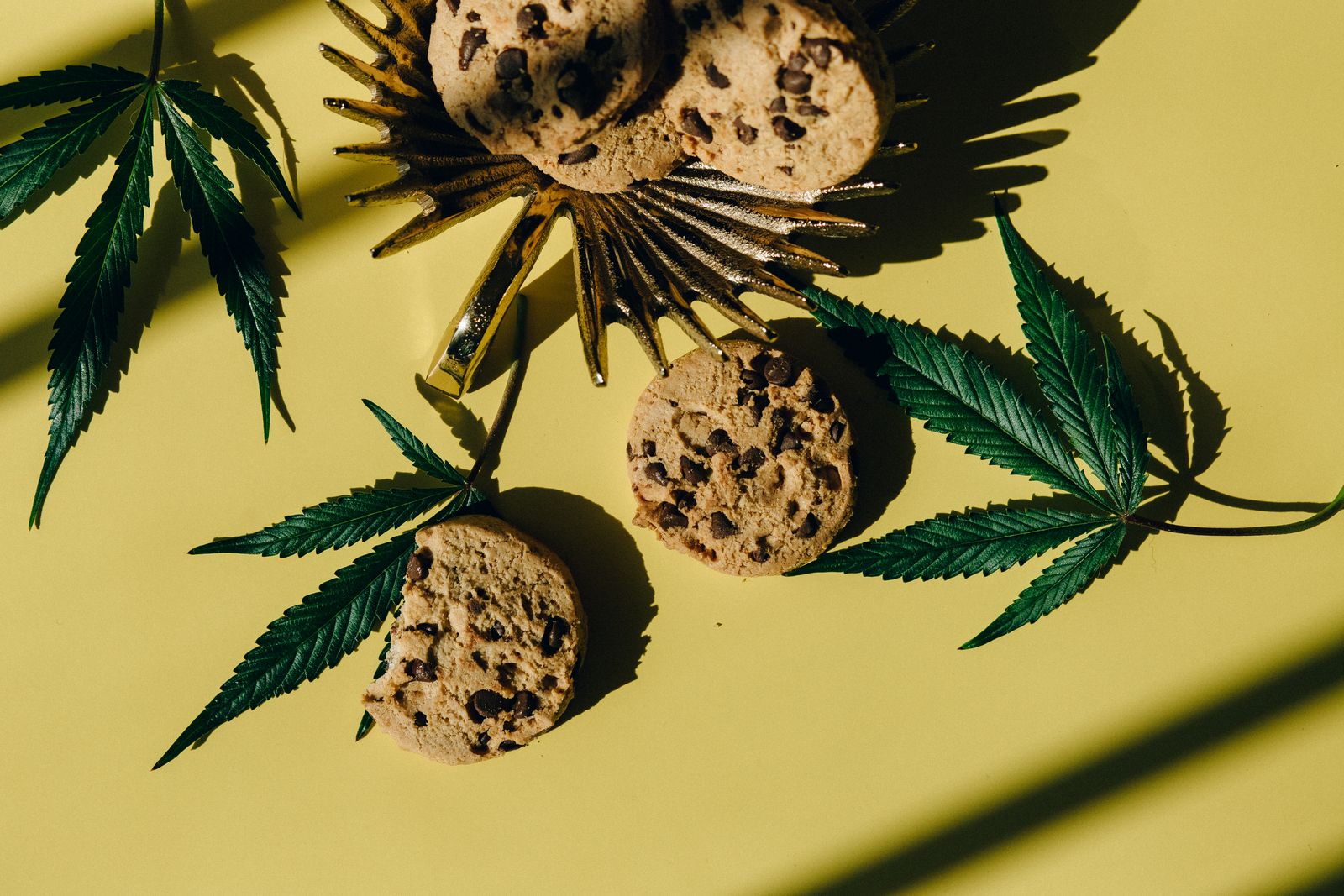
Check the total THC in the package and the THC per piece, since they are not the same thing. A single gummy from a 100mg package might contain anywhere from 5 to 25mg depending on the product. Knowing the per-piece number is what lets you portion a real beginner dose.
If You Take Too Much: Staying Calm and Safe
It is worth stating plainly: there are no known cases of a fatal overdose from THC alone. Taking too much is genuinely unpleasant and can be frightening, but for an otherwise healthy adult it is not life-threatening, and it will pass. Common effects of overconsumption include intense anxiety or paranoia, a racing heart, nausea, dizziness, and a strong sense of unreality. The single most useful thing to know in that moment is that these feelings are temporary and that time is the cure.
- Move somewhere calm and quiet, sit or lie down, and remind yourself this will fade in a few hours.
- Hydrate with water and have a light snack if you can manage it.
- Tell a sober friend or partner what is happening so you are not alone with the feeling.
- Try slow, steady breathing to bring a racing heart back down.
- Some people find that chewing black peppercorns or sniffing pepper helps with anxiety, a folk remedy that early reports support but research has not firmly confirmed.
- Do not drive, and do not take any more cannabis trying to fix it.
Most overconsumption resolves at home with time and reassurance. Seek medical attention if symptoms are severe, such as chest pain, persistent vomiting, trouble breathing, fainting, or a level of confusion that worries you, and especially if cannabis may have been combined with alcohol or other substances. Children and pets are a different category entirely: if anyone ingests edibles by accident, contact poison control or a doctor right away.
“With edibles, the dose you take is a decision you make once, calmly, before anything happens. Respect the wait and the rest takes care of itself.”
None of this is meant to scare you away from edibles. Used thoughtfully, they offer a long, smooth, lung-friendly experience that many people prefer to inhaling. The whole game is front-loaded into two simple habits: pick a small dose you understand, and wait two hours before reconsidering. Get those two right and edibles become one of the most pleasant and predictable ways to enjoy cannabis.
Accurate labeling and properly tested, clearly dosed products make all the difference for beginners. Browse our directory to find vetted, licensed dispensaries in your area, compare edible menus, and start low with confidence.
Found this helpful?
Share this article with fellow cannabis enthusiasts and travelers.
Continue Reading
 Products
The Complete Edibles Dosing Guide: From Beginner to Experienced
Edibles are the most common source of bad cannabis experiences — almost always because of dosing mistakes. This guide breaks down exactly how much to take and what to expect.
 Health
Microdosing Cannabis: Benefits, Methods & Who It's For
Microdosing means taking just enough cannabis to feel a subtle shift without getting high. Here is what the practice involves, the methods that make it precise, a simple titration protocol to find your minimal effective dose, and who should be cautious.
 Health
How Cannabis Affects Your Body: A System-by-System Breakdown
From your brain to your gut, cannabis interacts with nearly every major system in your body. Here's what current research tells us about each one.